29 October 2025

Transmission and the Third Evolution

In the Second Evolution, the environment selects through the phenotype (Darwin's natural selection), which is coded by a species' genome. However, only the genes are reproduced and transmitted. Gene selection is therefore done indirectly. The concept of transmission does not apply in the First Evolution.

Writing allows the transmission of knowledge


How can we identify the parallel forces at work in the Third Evolution? Human beings exert selection on innovation, institutions, and new ideas, but they do not control their spread. What is selected is therefore what is communicated to others, and, more importantly, what has been written for the last ten thousand years. We can think of institutions, businesses, states as entities that implement what is written (in status) and outlive human beings. In this respect, ideals, ideologies, innovations and religions spread easily between humans. They are transmitted by humans, particularly by the human brain. Without brains, what is written is useless. Without the written or spoken word, the human brain, with all its frailties and biases, cannot sustain any development beyond autarky. Many authors emphasise the ability of human groups to accumulate knowledge. This accumulation is done outside human bodies in permanent traces (books, and now digital writings). This accumulation is horizontal and allows much faster transmission than the Second Evolution. Speed is central to the Third Evolution.

26 October 2025

Inefficiencies of Evolutions

 What is the Universe made of ? We are now in a position to answer precisely about the proportions. This is the  Cosmic Camembert:

The composition of the Universe, after the analysis of the Planck ESA mission

Using the equivalence of mass and energy, as described by Einstein's famous E=mc² equation, measurements of the cosmic microwave background allow us to indirectly "weigh" the universe. Today, the Universe is mostly made of dark energy, which behaves like a cosmological constant. Next comes cold dark matter, which only interacts with other matter via gravity. Finally, ordinary matter (stars, planets, gas, rocks, life and us) makes up less than 5% of the total. Radiation accounts for just 0.001%. Even in the 5% where all interactions (electroweak and strong) occur (other than gravity), only a small proportion ends up in galaxies. Overall, the universe can be considered almost oblivious to the rocky planet on which life and humanity exist. This is the inefficiency of the First Evolution.

Life is inefficient, too. In order to ensure the survival of its species, a tree must scatter countless seeds every year. And 99% of the species have vanished from the Earth. Less than 2% of the genome codes for proteins. The rest is known as 'junk DNA' or 'dark DNA'. A final example, the eye proceed from an awful design if we listen to engineers. Indeed, the wiring (the optical nerve) is going out from the retina through the vitreous body, i.e. by masking some light, in particular via the blind spot.

The jury is still out on the Third Evolution. We can think of inequalities as a kind of inefficiency. In that case, the Third Evolution is still very inefficient. However, efficiency must be evaluated in terms of cost versus benefit. One dimension could be the information-to-energy ratio. Today, we consume much more energy per capita than a few generations ago, but we also process much more information.

In short, the three evolutions are unguided (see a previous post on the blindness of evolutions). Consequently, they are costly and seemingly inefficient.

04 January 2025

The Future

 It is difficult to make predictions, especially about the future.

Predicting hard facts about the coming years, decades, or centuries is generally presumptuous. 
We can project trends, but we know they will fail sooner or later. Misconceptions often lead us to the wrong conclusions as Pinker and Rosling, among others, have shown.

Trends

People are richer and healthier.
There are fewer wars and fewer victims of natural disasters.
Education is more widespread than ever before.
Information has never been more evenly distributed.
People have never been more connected.
Resources have never been more in demand by an energy- and mineral-hungry humanity. 
Religions and ideologies continue to adapt to the modern, changing world, attracting people in need of security. 
Universal values are spreading.
Cooperation and competition remain two of the most important ways of generating new ideas and innovations.
Other trends concern population growth and the climate change.

Projection

The health and economic condition is increasing for the whole world population.
Wars, as a means of solving domination issues, disappear. Instead we have instances of dispute resolutions at various regional and global levels.
The health and economic conditions of the entire world population improve.
Wars as a means of resolving issues of domination are disappearing. Instead, we have instances of dispute resolution at various regional and global levels.
Education is the universal means for young people to climb the (ever-growing) knowledge pyramid.
Access to information is a key issue. New technologies continue to emerge to facilitate our connection with people and the world.
Innovation is proving to be the only way to switch to the noble energy: electricity.
Countries are becoming more secular and religions are being reduced to the private sphere.

Failure

Of course, as this vision of the personal computer in 1954 reminds us, examples of evolution are hard to come by.


How a Home Computer was Imagined in 1954

Who could have forecast the downfall of Kodak paper photography?

The Third Evolution

The Third Evolution is the new evolution that is happening now: the DNA-based evolution was too slow and has been replaced by the human-based fast evolution. Humanity is not the center of this evolution, but it is the engine of it, just as DNA genes are the engine of the Second Evolution. Institutions are the new emerging appearance of how this new evolution is organized. The characteristics of this new evolution are exactly the same as those previously described in this blog: inheritance (things do not arise spontaneously), digital characteristics, diversity of the environment, unicity (human-driven evolution), blindness, and randomness.

Ref: 
Steven Pinker, Enlightenment Now: The Case for Reason, Science, Humanism, and Progress (2018)
Hans Rosling Factfulness (2018)

13 October 2024

Collective Intelligence

 There is a long list of fascinating cognitive biases in humans, including confirmation bias, conservatism bias, clustering illusion, selection bias, cognitive dissonance, egocentric bias, agent-detection bias, and anthropomorphism, among many others. Individuals exhibit a range of behaviors, driven by both emotional and rational motivations, in response to varying environmental stimuli. From an individual perspective, it is possible to identify numerous instances of failure and error that can be attributed to specific behaviours. 

Although psychological vulnerability is a factor, it would be a mistake to underestimate the achievements made at the sociological level. This is not to discuss crowd erratic behaviours, for example, but rather sophisticated social constructs such as institutions (school, town-halls, states, sports, cultures, religions, businesses, scientific corpus, and so on).

Institutions usually survive their founders. They can have a finite lifespan but some are so persistent, beyond the people who have created them, that we must conceptualise them as "new organisms" in the Third Evolution model. This is Collective Intelligence from human beings with a firm longlasting influence.

 The United Nation General Assembly Photo ONU/ Manuel Elias


03 March 2024

No Purpose

We would like to dispel the intent bias once and for all. As human beings, we have always looked at our surroundings in awe. Finding a cause for observed events has usually led to positive action. Noise in the bush: act like it is a tiger: run! We assume (perhaps too much) the intent of other people in their actions. This behaviour clouds our view of the three Evolutions.

No purpose in the first evolution

The Big Bang scenario makes no mention of a superior intelligence leading to the Universe as we know it. Nor does the evolution of the Universe necessarily imply the appearance of life anywhere. At least, the conditions in the universe are just compatible with life. But they do not imply it. After the Big Bang and the physical Universe, chemistry is working towards the complexification of some open systems in very localised parts of the Universe. For example, in molecular clouds there are many unexpected reactions leading to complex molecules (i.e. containing at least a dozen atoms). Terrestrial planets with liquid water are likely to be sites of even more complex chemical reactions. But we do not observe anything in the Universe that cannot be attributed to spontaneous physical interactions and chemistry. We see no intent! The Universe just is, and evolves.

 No purpose in the Second Evolution

It is one of Darwin's (many) great discoveries. There is no reason why a particular species arose. Only natural selection which is the main mechanism available to sift through random mutations in the DNA of species. There is no purpose in the evolution of life. For a long time people were misled into looking at how well species are adapted to their environment and concluding that something is guiding the manipulation, that there is a clear intention to adapt each species to its environment. We now know, thanks to neo-Darwinism, that this was a mistake. A blind mechanism (natural selection) is a much more sophisticated and powerful means by which we have seen complex organisms emerge that are well adapted to their environment. For example, the eyes of bats are very sensitive, adapted to night life, but they do not provide sharp or colourful vision.

The tree of life is not reproducible.

No purpose in the third evolution

For a long time, it was clear to mankind that everything was organised around human beings. A cast soon invented gods to explain what we could not understand. For example, Nordic gods like Odin were there to explain the Northern Lights. The god's territory has since shrunk with the advance of science and technology. Nowadays, human beings cannot reasonably use gods as an explanation of every mystery.

 The third evolution is about human social organisations. They are not controlled by genes. These organisations (for example money, countries, a football club) have a purpose on their own. But this is limited in scope, and not a single human being or organisation has a control over all organisations. 

For a long time it was clear to mankind that everything was organised around man. Soon gods were invented to explain what we could not understand. For example, Norse gods like Odin were there to explain the northern lights. The territory of the gods has shrunk with the advance of science and technology. Nowadays people cannot reasonably use gods to explain every mystery.

 The third evolution concerns human social organisations. These are not controlled by genes. These organisations (e.g. money, countries, a football club) have their own purpose. But this purpose is limited, and no single person or organisation has control over all organisations.

In short, there is no overall purpose in the Third Evolution. This conclusion is at odds with the major ideologies (Marxism, Socialism, Capitalism) and the powers of dictators/monarchs. There are many people who still believe that higher powers (be it a god or big capitalist corporations) control the world. I think this is again the intent bias showing up. In practice, the Third Evolution with complex organisations has no purpose. The gradual change we see around us is still very pregnant for all of us. But it is not written down anywhere.

Perhaps this is what really struck Albert Camus when he wrote about the absurdity of life. Life simply has no meaning.


By Jean Louis - Own work, Public Domain, https://commons.wikimedia.org/w/index.php?curid=18139299
L'étranger de Camus

30 July 2023

Multicellular organisms and Division of labour

 Multicellular Organisms

According to Wikipedia, multicellular organisms probably appeared in large numbers about 500 million years ago, during the Cambrian explosion. So, in terms of time, most of the Second Evolution has been dealing with single-celled organisms (prokaryotes, then eukaryotes). But suddenly, as soon as multicellular organisms appeared (the jury is still out on how), they flourished on Earth. We cannot speak of an advantage over unicellular organisms (because unicellular organisms still dominate the biomass), but rather of a new feature that allowed diversification and new adaptive traits. All animals, plants and fungi are multicellular organisms. Cells can specialise (liver, lung, brain, muscle...) and they all work together as a single individual.

Division of labour

It is only an analogy, but we see the general trend of human organisations becoming more specialised as similar. The division of labour has a powerful effect on the way people interact. Small groups of people living in autarchy are disappearing. On the contrary, human interdependence is increasing. A steelworker has no idea how to treat a cavity in his tooth. A real estate agent has no idea how transistors are used by engineers.

The Third Evolution is the emergence of organisms that bring a large group of people together to achieve some goals. These organisms/institutions can be as simple as a family or as complex as India, the Coca-Cola Company or the Christian religion.

People can gather in a stadium. They meet peacefully towards a common goal (enjoying some sport event). Harari mentioned that with monkeys it would be pandemonium.


07 May 2023

Speed is key to the Third Evolution

On 14 May 1610, at 16h, Ravaillac assassinated Henri IV, King of France, in the rue de la Ferronerie in Paris.  The historian Michel Cassan studied the town archives of 240 French towns. He found that the towns along the postal network set up by Sully received this important piece of information on the same day. By 21 May, all the towns in France had received the news (7 days later).  On Wednesday 8 September, the news of the King's death reached Mexico via Spain, more than 3 months later.


Ravaillac and King Henri IV
Ravaillac killing King Henry IV. Painting by Gustave Charles Housez

Compare the speed of information transmission in 1610 with the instantaneous coverage of Apollo 11 astronaut Neil Armstrong's first step on the moon on 20 July 1969. Billions of people around the world saw the event at the same time.

In the 21st century, most information takes less than 150 milliseconds to travel around the world.

This is what Buskes calls a fundamental difference/advantage of the Third Evolution over the Second Evolution: : 

"Apart from the different trajectories, there might also be significant differences in speed by which cultural information is transmitted. In small prehistoric populations of hunter–gatherers the mode of transmission was probably mainly vertical and one to-few, resulting in a relatively slow stream of information and a corresponding sluggish pace of evolution. In our modern world, however, the situation has dramatically changed. With the advent of writing, printing, the internet and the social media, the mode has changed from predominantly vertical and one-to-few to horizontal and one-to-many, resulting in an ever-increasing flow of information
racing around the globe with lightning speed."

This difference is not better intrinsically, but it means the Third Evolution takes over, as speed has become a key adaptation feature.

See another example of the speed of information transmission in the 19th century:

The Trafalgar Way, on a wall behind the Guildhall in Salisbury (UK), explains how the news of the English victory at Trafalgar (October 21, 1805) was rushed to London on November 6! The speed was less than 12 km/h.


Ref: 

Michel Cassan, La grande peur de 1610. Les Français et l’assassinat d’Henri IV, 2010

Patrick Boucheron, L’histoire Mondiale de la France, sous la direction de, Seuil 2017, Stéphane Van Damme, p. 292

Darwinizing Culture: Pitfalls and Promises, by Chris Buskes, about Peter J. Richerson and Morten H. Christiansen (eds): Cultural Evolution: Society, Technology, Language, and Religion. The MIT
Press, Cambridge, MA, 2013, 485 pp, ISBN: 978-0-262-01975-0


09 April 2023

Science as a Darwinian process


The way science progresses has been the subject of many theories. Thomas Kuhn popularised the concept of paradigm. In a scientific field, a paradigm is a set of concepts that more or less fit the mass of experimental data with some models and theories. The whole set tends to protect itself from the accidents of new experimental facts and new theories that can occur from time to time. It takes what Thomas Kuhn calls a scientific revolution (overwhelming evidence in theory and/or experiment) to move from one paradigm to another.

Karl Popper also challenged what can be called scientific. His concept of falsifiability is now part of the criteria used to decide what academic field can be called scientific (think creationism, psychoanalysis, homeopathy).


On the other hand, Martin Harwit has shown how scientific discoveries were often made simultaneously and by independent people. For example, we can take Darwin and Wallace, or Einstein and Poincaré, as clear examples of great discoveries being made independently of each other. Nobel Prizes are often awarded to several independent discoverers of the same new scientific fact. For example, the Higgs mechanism has been found at least twice separately. The periodic table of elements was theorized many times, until it stabilized with Mendeleev. His model was superior to the others because it predicted new elements that were eventually discovered.

Here we think that ideas are generated in an environment. They are basically randomly generated then filtered in the brains of different people. Then they are tested by experiments in the environment of the world: General relativity had to explain the whole corpus of gravitational science set up by Newton, and it could explain even more (the precession of Mercury's perihelion for example). Then it predicted that matter could bend light, and Eddington measured this during a famous solar eclipse.

Science progresses by testing hypotheses in a specific way: ideas can lead to predictions in an experimental setting. These tests can be done anywhere at any time. They can be repeated by anyone. Science is the corpus of ideas that have been tested by experiments with a strict methodology, with repeatability, falsifiability, refutability and predictivity. Karl Popper insisted that scientific ideas cannot be proven. Instead, there must be a way to show how they can be refuted. There must be experiments that test the ideas. Otherwise, the ideas are considered outside the scope of science. This is why science has split from other ancient disciplines such as theology and philosophy.

In any case, we see Darwinian evolution at work in the scientific process. The experimental method sifts through all ideas. Ideas that pass the tests are selected and retained.

They are then passed on to the younger generation of scientists and, in the long run, assimilated by the public. The progress of science is now much faster because the corpus of science can be easily written down and transmitted.

This figure shows how new objects were rediscovered in the field of Astronomy (Martin Harwit)

Ref: Thomas Kuhn, The structure of Scientific Revolutions (1962)
Karl Popper, The Logic of Scientific Discovery (1935)
Martin Harwit, Cosmic Discovery: The Search, Scope and Heritage of Astronomy (1981)  


25 March 2023

The Third Evolution: main characteristics (3/3)

Here we show how the Third Evolution shares many characteristics with the Second Evolution: the blindness, the randomness, the digital base, the unicity, the diversity, the role of the environment, the inheritance. Today we finish the grand tour with diversity, environment and inheritance.

Diversity and the role of the environment

Evolution occurs as a gradual adaptation between the diversity present in the system and the environment.
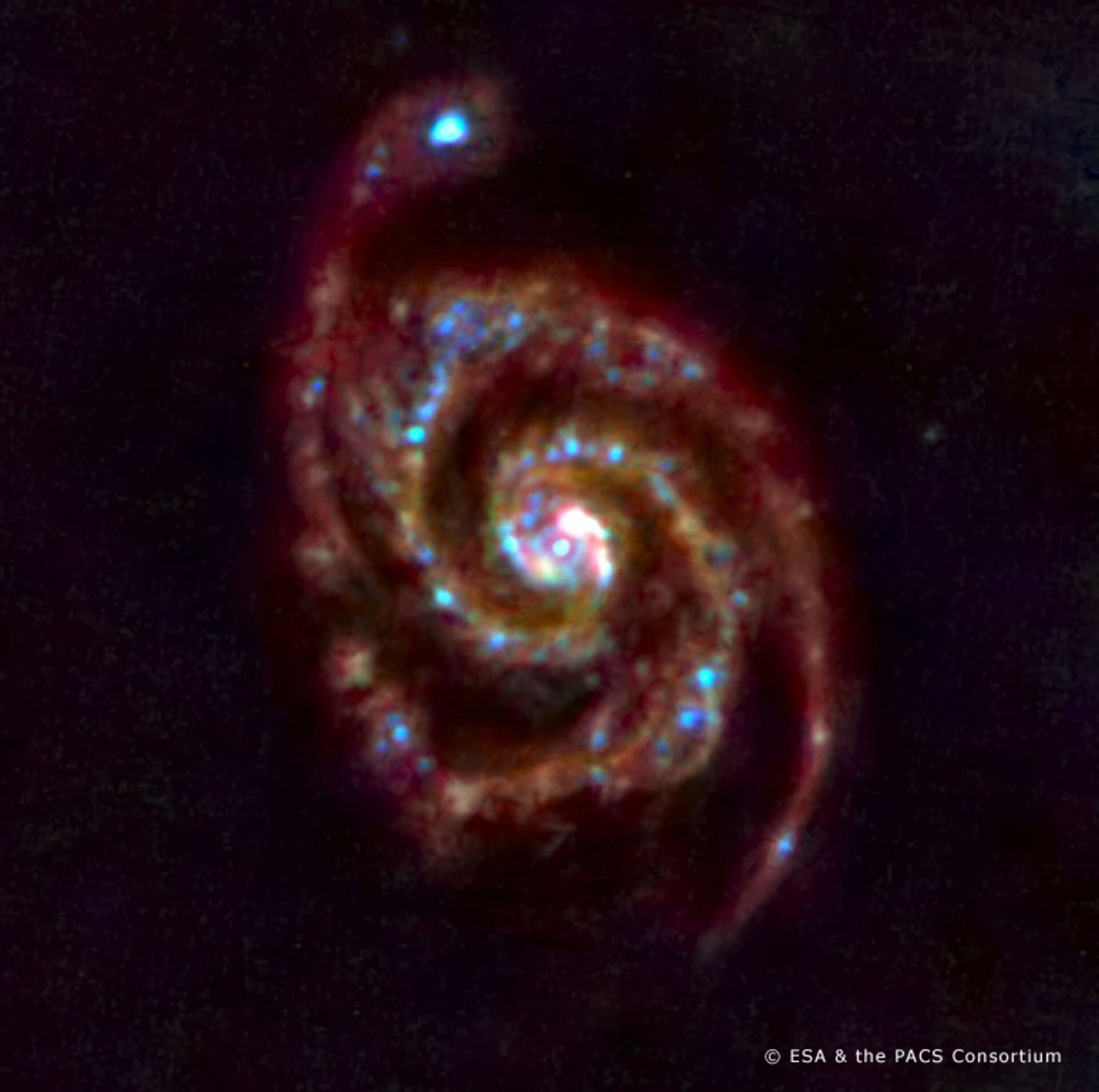
The rate of star formation in a galaxy (First Evolution) is likely to be related to its immediate environment (made up of other galaxies). Spiral galaxies are everywhere in the Universe, but they are all different. We continue to marvel at the different shapes of galaxies. No two galaxies are the same. We know that the interaction with the other galaxies shapes the galaxies. The environment of that galaxy is specific to that galaxy.
The M51 galaxy has been collided with another galaxy, NGC5195 (blue blob at top). This far-infrared image from the Herschel telescope shows (in blue) sites of star formation triggered by the collision. Each galaxy has its own specific history of environmental influences.


Bacteria can be of exactly the same species, but they all have slightly different shapes and contents. Ultimately, the origin of species is the response of the (Second) Evolution to different environments. Bats are adapted to see at night. Fish are adapted to the sea, and so on.

Brains may look the same, but we now know that the exact wiring has been produced as an interaction between the genetic code and the environment that people get throughout their lives. So there are no two identical brains, even in twins with the same genetic code. The diversity of human cultures is staggering. But we can see how the environment has been the main driving force of diversity. Olives are a central culinary item in Greece, not in Greenland!

Inheritance

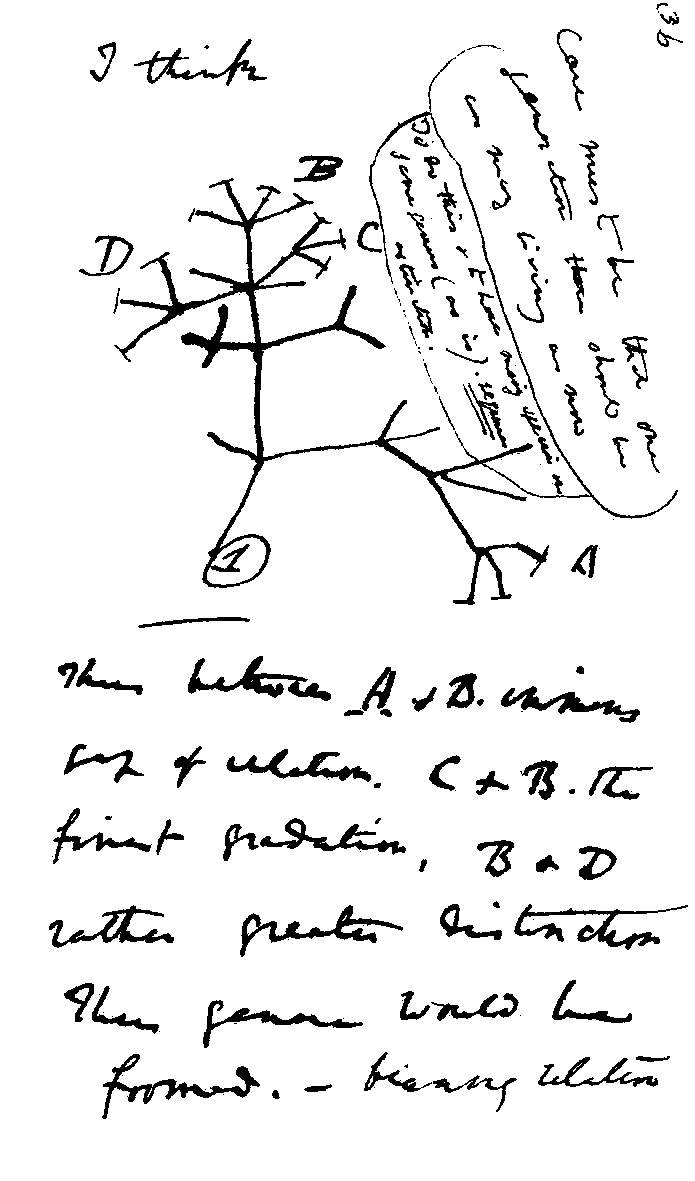
Evolution is about gradual change. Spontaneous and instantaneous transitions do not occur. Every species comes from an ancestor, and this is true of the three evolutions. The tree of life seems to be a generic concept: galaxies are born from the agglomeration of smaller units. The genetic material of children comes from their parents. Ideas, concepts, memes, institutions can usually be traced back historically to previous ideas.


19 March 2023

The Third Evolution: main characteristics (2/3)

Here we show how the Third Evolution shares many characteristics with the Second Evolution: blindness, randomness, digital basis, unicity, diversity, the role of the environment, inheritance. Today we will look at unicity.

The Unicity

The Universe (First Evolution) is unique. Wherever we observe the Universe, it looks statistically homogeneous. The laws of physics seem to apply everywhere: the transition levels of hydrogen are always the same wherever we measure them, except for the effects of light propagation (whether gravitational, such as lensing or redshift, or electromagnetic). The physical constants apply to the whole universe and are constant in time. At present, the best explanation we have is at the very beginning of the universe, when a period of inflation allowed all parts of the known Universe to be connected.

Life (Second Evolution) is unique. Every cell of a living organism uses the same DNA-based replication system. This may not have been the case in the beginning: there may have been an RNA-based system, or even a simpler one. But this has disappeared and there is only one form of life on Earth today.

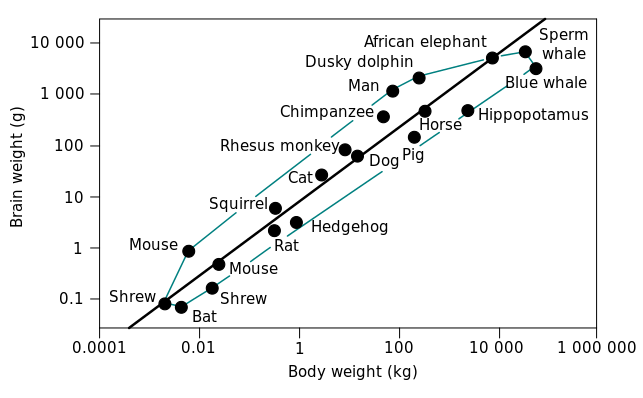
The Third Evolution is carried by the human species. It is now established that Homo Sapiens (HS) is a unique species. For example, the close cousin Neanderthal species has disappeared. The human brain has emerged from the Second Evolution, but something different is now happening: problem solving is no longer left to the slow process of life-based tinkering evolution. Artifacts and writings are now spreading massively, outside of living organisms. They are produced by only one species: Homo Sapiens. Scientists have shown that HS is quite special, not in brain mass, but in the ratio of brain mass to total mass.

On that measurement rod, mice and dolphins fare as well as humans! An even better predictor of "intelligence" is now thought to be the fore-brain neuron count.

12 March 2023

The Third Evolution: main characteristics (1/3)

Richard Dawkins made a convincing argument about the defining features of the Second Evolution. We will now demonstrate how the Third Evolution shares numerous characteristics with the Second Evolution. These include blindness, randomness, a digital base, uniqueness, diversity, the role of the environment and inheritance. Today, we will address the first three characteristics.

The Blindness

The evolution of life and the new third evolution serve no purpose. This was a devastating blow to the religions of the 19th century, as they had based their entire belief system on the existence of an omniscient supernatural being controlling everything on Earth. Darwin's Origin of Species was a significant blow to the idea that everything on Earth has a purpose. A bat is as useful as it is useless. It has no purpose. We are certain that the new evolution has no purpose. Let me be clear: no human being, nor any superbeing, is controlling the evolution carried by the human brain.

This notion is counterintuitive because we like to think we are in control. The directions and adaptations we see in living bodies and human brains seem clearly to have a purpose.

We assert that the majority of cultural evolution has occurred without any intent whatsoever. We will demonstrate this in future posts.

The Randomness

The randomness is at the heart of each of the three evolutions:

In the Universe, the fluctuations of the matter-energy density are produced during the inflation as Gaussian from quantum inherent noise. They will then grow linearly during the expansion of the Universe and eventually collapse when the Universe becomes transparent, and produce the large-scale Universe as we observe it today. So the initial conditions are random and, consequently, there are no twin galaxies in the Universe.

Each of the three evolutions is defined by randomness.

The fluctuations of the matter-energy density in the Universe are produced during inflation as Gaussian from quantum inherent noise. They will then grow linearly during the expansion of the Universe and eventually collapse when the Universe becomes transparent, producing the large-scale Universe as we observe it today. The initial conditions are random, so there are no twin galaxies in the Universe.

Biological evolution is also devoid of any intrinsic purpose. It is the relentless trial and error of genetics that has made life as we observe it today. The primary source of fluctuations in genetics is either cosmic rays or viruses. These rare failures of perfect reproduction from one genome to the next are the main source of genetic variation. Cosmic rays are the link between the randomness on Earth and space. Viruses are a unique and challenging entity for biologists to classify. They are clearly parasites with RNA, so they are part of the living "stuff". There are multiple sources of randomness at play here. The environment in which living organisms evolve (basically on Earth) is highly fluctuating and far from thermodynamic equilibrium. Other species influence a given species. They can make it thrive or they can make it die.

This essay puts forward the bold hypothesis that the source of new ideas is simply randomness in our brains. We can be sure that what comes out has been filtered by our sense of reason and emotions. But at the source of ideas, what else could be on the table but some random stroke of genius in isolated brains?

The digital base

The Mendeleev periodic table contains a definitive list of about a hundred different kinds of atoms that can exist in the Universe. That's all there is to it. Each atom has a given, discrete number of electrons. Hydrogen is number one. Helium two. Lithium is number three. And so on.


The genetic information is coded in the DNA, which is stored in the nucleus of almost all living cells. DNA is a long code made up of only four letters.


This is the basis of the Third Evolution. It is indisputable that the 6,000 languages spoken on Earth form part of the code through which information is transmitted between human beings. Languages are made up of a finite number of letters or ideograms. The simplicity of the building blocks allows for an infinite number of combinations.


Evolution can only work through discrete coding systems. This is the only way to avoid the inexorable averaging process, which is encoded in the Gaussian limit theorem.


26 February 2023

The Third Evolution: a summary

There is no doubt that a new evolution has appeared. It follows the first one (the Universe giving way to complex physics and chemistry in some parts of each galaxy) and the second one (DNA-based life on Earth). This Third Evolution is linked to mankind. There is no doubt that human beings are part of the DNA-based life too. And the Third Evolution is linked to the Universe.

So, what is it? We will now attempt to make sense of what is happening before our very eyes.


Some scientists have stated that cultural evolution should be considered the new evolution. Cavalli-Sforza and Feldman (Cultural Transmission and Evolution: A Quantitative Approach, 1981) are adamant that we must identify the means by which culture is transmitted: parents to children, friends to friends, institutions to individuals. Although it is very important, this notion may be too narrow and depends on different populations on Earth. Cultural evolution is not universal.

The meme paradigm has also been proposed (The Meme Machine, Susan Blackmore 1999). However, this theory failed to provide a universal model of a meme.

 We believe it is time to move beyond these theories and recognise that the Third Evolution is using mankind, but is not centred on it, in the same way as the Second Evolution uses genes, but genes are not the centre of it.

We will develop that idea in the coming posts.


21 January 2023

The Second Evolution

Darwinian principles have shaped life on Earth. We know today that life is controlled by DNA. DNA is present in every cell of every living organism, whether animal or plant. Life began 3.5 billion years ago with simple cells and probably some kind of RNA or even less sophisticated information retention capabilities. The evolution of life is nothing short of staggering. One major step is the start of collaboration between several cells to form a superior entity. Multicellular organisms appeared quite late, probably only half a billion years ago.

Darwin's On the Origin of Species and the discovery of DNA as the repository of life information put the theory of evolution on very solid grounds. Life on Earth is evolving, and this means that gradual changes have appeared that make all living species adapted to their environment. Two ingredients are necessary: the randomness of the rare DNA mutations and the natural selection process that filters out the un-adapted ones. 

The human species is no more special than any other and is completely relevant to the life of Earth. It is simply the end of a non-unique branch in the evolutionary tree.


It is, in fact, just one species. There is only one species alive today. However, evolution is limited by the generational renewal. A new trend will emerge after at least a hundred generations. For example, the lactose-tolerant adults in Europe appeared only after several thousand years of selective pressure.

We are convinced that this second evolution is being swamped by a new one, simply because the third evolution is going much faster. I will explain more about this later.

08 January 2023

The First Evolution

The Universe as we see it today was very different in the past. Evolution is a gradual change over time, and the Universe has been evolving. It is still changing now.

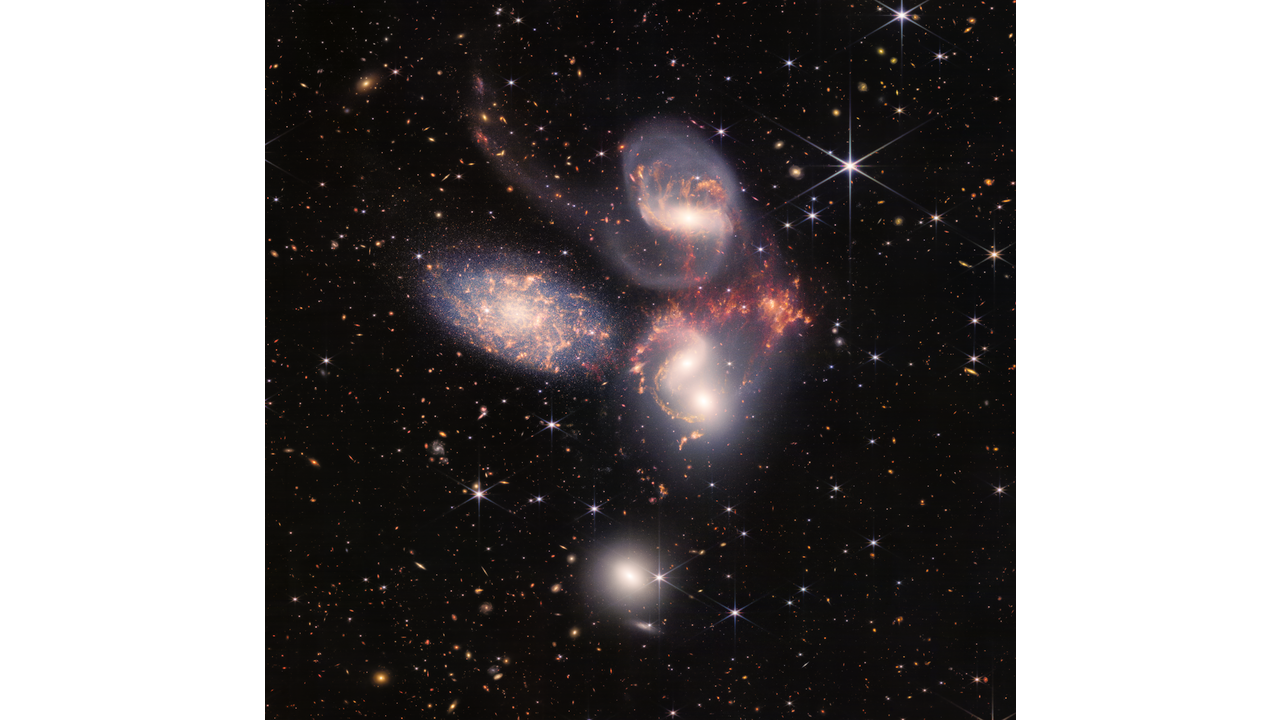
Compare this image of colliding galaxies (the Stephan Quintet as recently observed by the JWST) in a nearby region of the Universe:

 
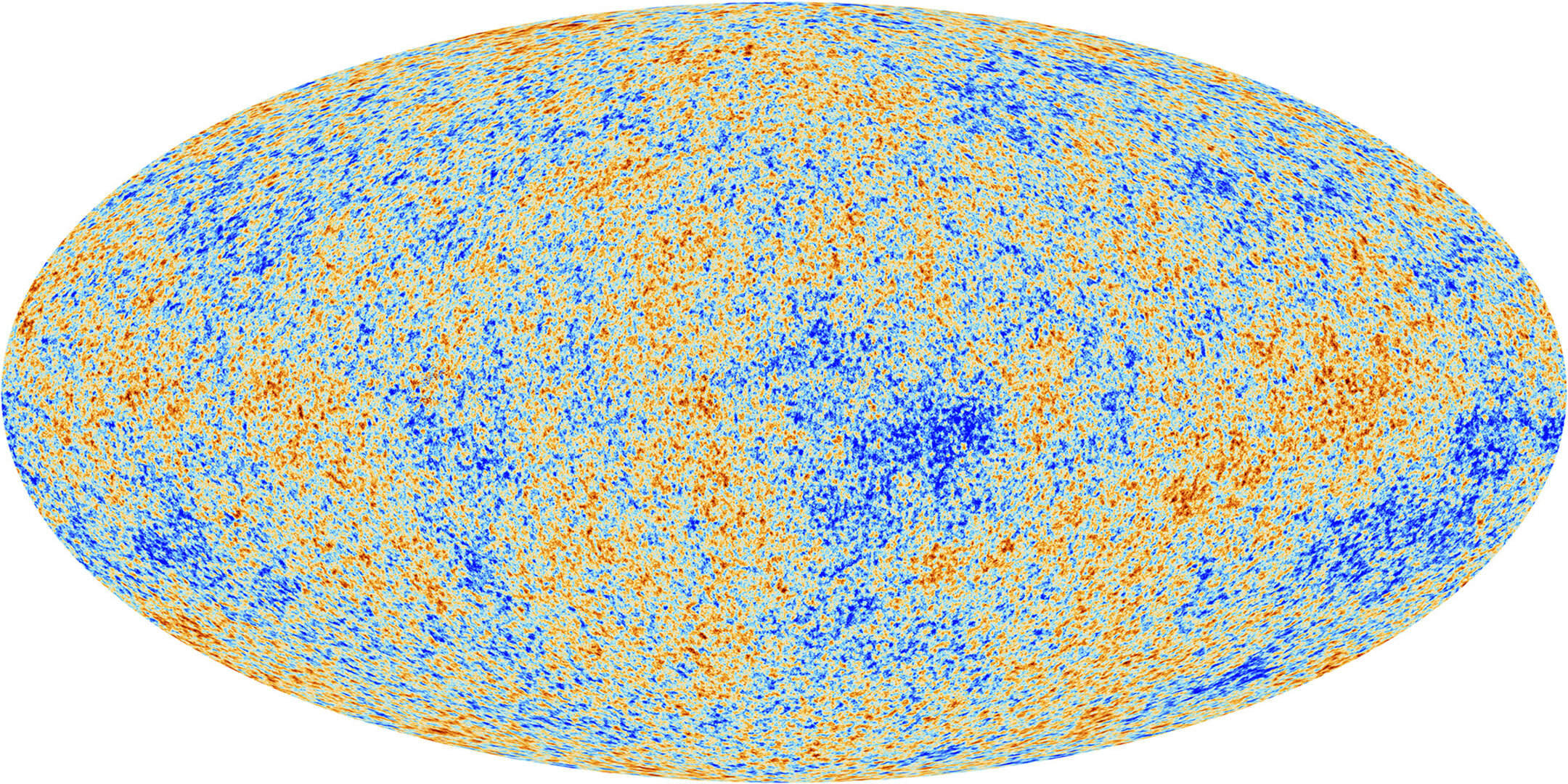
with the state of the Universe 13.8 billion years ago (as revealed by the Planck satellite) :

When the Universe was 380 thousand years old, it was much smoother or more homogeneous: we see relative temperature differences of about one part in a hundred million. Then, gravitation and the electromagnetic force have shaped the world into galaxies, stars, and so on. Even before this first photo of the infant Universe, the simple atomic elements (hydrogen, helium, and lithium) were formed in the first minutes, by the strong and weak forces. But no carbon was created at all.

Since then, new elements have been synthesised in stars, including carbon, and at the end of their lives. These elements were then distributed throughout the galaxies. This is chemical evolution.

The fate of the Universe is clear: it will go into dilution, with neighbouring regions moving further and further apart, and stars dying. Small pockets of the Universe will continue their "life" - a constant struggle against entropy.